
Medical Instruments And Personal Care
What This Process Needs To Solve
Two product families that look unrelated end up in the same conversation because both are small, handled, and judged by feel: a surgical instrument that drags in the hand is rejected at inspection, and a personal care burr that grabs instead of cutting is returned by the user. Both are finishing problems where the powder sets the result.
We supply micron powder from W1 to W40 for instrument finishing and grit from 80# to 700# for electroplated personal care burrs.
Why residual magnetism matters on stainless
Surgical stainless is finished, then passivated, then sterilised and used in an environment where a magnetic residue is not cosmetic. Iron left in the surface layer becomes a corrosion initiation site, and on an instrument that is autoclaved repeatedly that shows up as pitting long before the tool is worn out. The same residue also affects how the instrument behaves near imaging equipment. On this work we specify and report magnetic content per lot rather than quoting a general purity figure.
Cutting or grabbing
A personal care burr runs at high speed with almost no pressure behind it, so the grit has to cut on contact without needing load. That puts the requirement on crystal shape and coating rather than on grit size alone: an angular particle with a nickel layer keys into the plating and presents edges, while a smooth or over-coated particle slides. The grit ladder runs from 80# for shaping down to 700# for the finishing heads, and the fine end is where a burr either feels smooth or feels sharp.
What we hold on the batch
Both families are specified on the oversize end. A single coarse particle on a small head is a visible scratch on an instrument or a catch on skin, and in both cases the defect is traced back to one grain rather than to the batch average.
Where It Goes Wrong
- Pitting after autoclave cycles. Iron residue in the surface layer, not a steel fault.
- Instrument drags instead of gliding. Finishing grade too coarse, or no intermediate step.
- Burr grabs on contact. Crystal shape or coating, rather than grit size.
- Plating lifts on a small head. One oversize particle on a contact area too small to absorb it.
Recommended Grade By Product Family
Instrument finishing and personal care burrs are specified on different properties even though both are small-part work.
| Application | Recommended grade | Micron / grit | Why this grade |
|---|---|---|---|
| Surgical instrument finishingStainless, titanium, cobalt chrome | |||
| Rough finishing after grinding | HDY monocrystalline | W20 – W40 | Removes grinding marks without embedding iron |
| Pre-polish | HDY, low magnetic content | W5 – W14 | Sets a uniform scratch before the mirror step |
| Mirror finish | HDYM fine micron | W1 – W3 | Reaches a finish that passes visual inspection |
| Electroplated personal care burrsHigh speed, low pressure | |||
| Shaping heads | RVD / RVG, Ni coated | 80/100 – 170/200 | Angular grit with nickel keys into the plating and cuts on contact |
| Finishing heads | RVD / RVG, Ni coated | 230/270 – 400/500 | Finer grit gives a smooth head instead of a sharp one |
| Fine finishing heads | RVD, Ni coated, strict grading | 500# – 700# | Oversize control on a small contact area |
| Coating choiceBond and temperature | |||
| Sintered or high-temperature heads | Ti coated grit | 100# – 230# | Titanium isolates the diamond from oxidation |
Factory Direct Since 1990
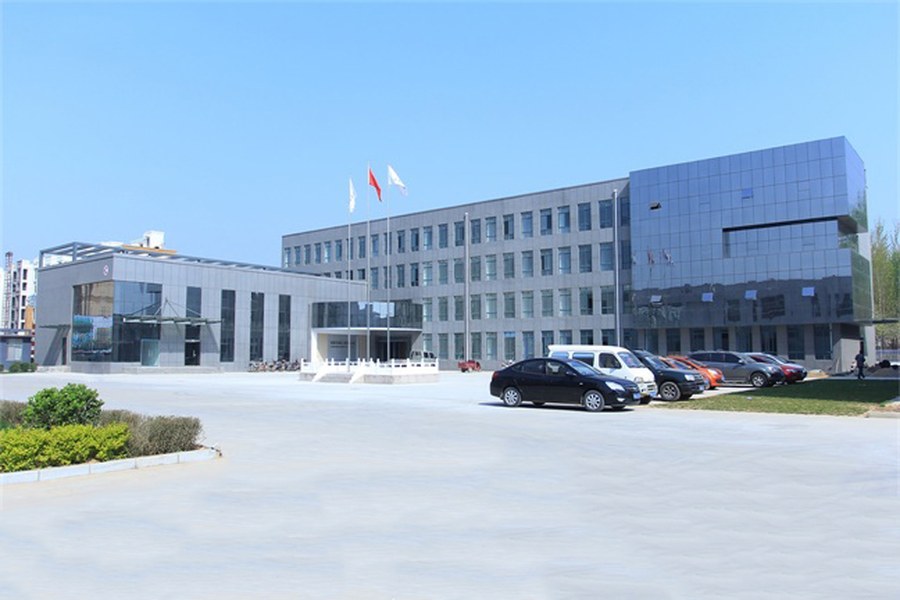
Zhecheng Hongxiang Superhard Material Co., Ltd. is an integrated manufacturer and exporter of synthetic diamond powders since 1990, located in the Diamond Capital of China.
- Own manufacturing base in Zhengzhou, Henan — powder, coating and grading on one site.
- In-house particle size and SEM inspection on every batch before packing.
- Export packing with neutral or custom label, plus sample quantities for process trials.

What To Include
Describe your workpiece, process and target result. We will match the diamond grade from the existing product range.