
Crushed Diamond Grit
Crushed diamond grit is produced from selected coarse diamond by crushing, screening, cleaning and drying. The particles are irregular, sharp-edged and rough-surfaced, and they fracture easily — and in a resin or vitrified bond that easy fracture is the point, because a particle that breaks down exposes a fresh edge instead of glazing over and burning the workpiece.
Crushed Diamond Grit Range
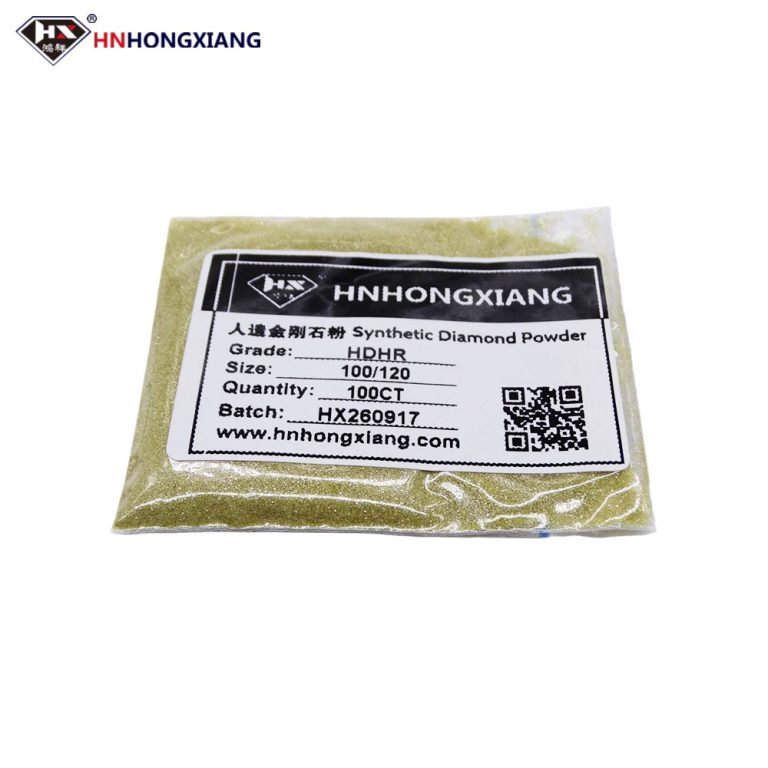
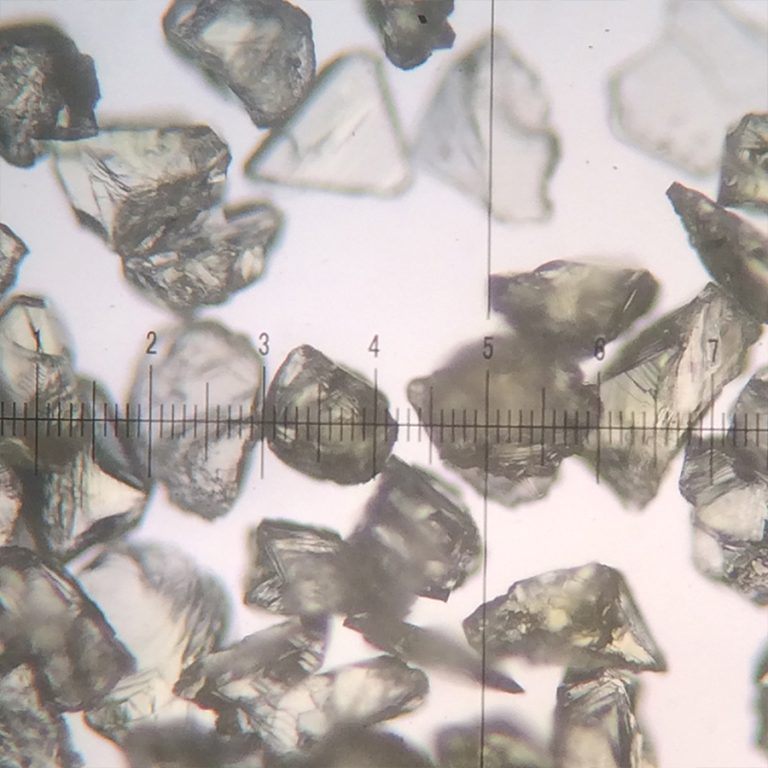
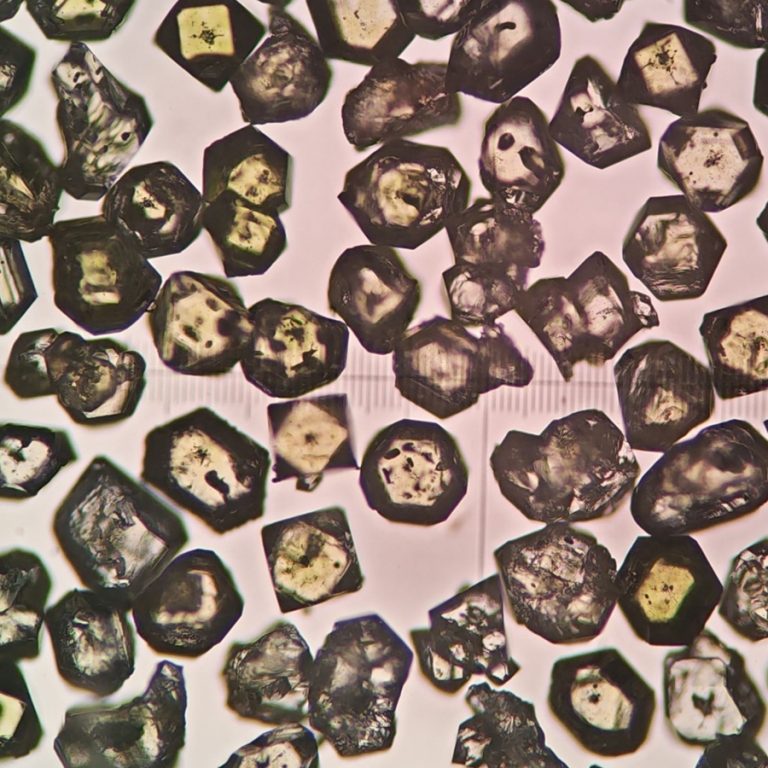
The family splits by material. Yellow grit is the RVD type: better friability and self-sharpening behaviour, low magnetic content, fewer impurities, and the usual choice worldwide. Black and green grit is the RVG type: slimmer and more angular particles, higher impurity and magnetic content, lower cost per carat, and normally bought for price-driven tool production where tool life is traded for cost.
Our yellow cuts are HDYR (Type I) and HDHR (Type II). The black cuts are HDGR (Grade A) and HDGNR (Grade B, graded to a wider tolerance), with HDGD raw black grit screened but not fully classified.
Which Crushed Grit To Choose
| If your priority is | Choose | Why |
|---|---|---|
| Consistent cutting and the widest process window | HDYR (Type I Yellow) | RVD-type yellow grit, closely graded, low magnetic content and low impurity level |
| Yellow RVD-type material at standard grading | HDHR (Type II Yellow) | The same yellow RVD family at standard grading |
| The lowest cost per carat with self-sharpening behaviour | HDGR (Grade A Black) | Black and green RVG-type grit; fractures readily and keeps cutting without a dress |
| Entry-level tools priced to a target | HDGNR (Grade B Black) | Black RVG-type grit graded to a wider tolerance |
| Grit for further processing or broad-PSD work | HDGD Raw Black | Screened only, not fully classified; the lowest cost form of black grit |
| Grit that has to survive load inside a metal bond | Monocrystalline Diamond (MBD) | High-strength blocky crystals selected to resist fracture |
Crushed Grit Grade And Size Range
| Grade (mesh)China standard | ISO codeEurope | Size range (µm) | Sieve no.Mesh no. |
|---|---|---|---|
| Coarse grit80/100 – 140/170Higher removal, coarser surface | |||
| 80/100 | D180 | 180 – 150 | 80# |
| 100/120 | D151 | 150 – 125 | 100# |
| 120/140 | D126 | 125 – 106 | 120# |
| 140/170 | D107 | 106 – 90 | 140# |
| Medium grit170/200 – 270/325General resin and vitrified bond wheels | |||
| 170/200 | D91 | 90 – 75 | 170# |
| 200/230 | D76 | 75 – 63 | 200# |
| 230/270 | D64 | 63 – 53 | 230# |
| 270/325 | D54 | 53 – 45 | 270# |
| Fine grit325/400 – 400/500Finishing wheels and lapping compounds | |||
| 325/400 | D46 | 45 – 38 | 325# |
| 400/500 | — | — | 400# |
Coarser cuts from 40/45 to 70/80 mesh are produced on request. Tell us the bond system and the tool you are building and we will confirm the cut and the strength class.
Crushed Grit Against Micron Powder
Against MBD high-strength grit
This is the same starting material, taken in the opposite direction. Crushed grit is deliberately made brittle and irregular so it self-sharpens in a resin or vitrified bond. MBD is a blocky, dense crystal selected so it will not fracture inside a metal bond that grips it.
Yellow against black grit
Yellow (RVD) grit has better friability and self-sharpening behaviour, lower magnetic content and fewer impurities. Black and green (RVG) grit is slimmer, more angular, more heavily contaminated and cheaper. Buy yellow when the bond has to release a dull particle predictably; buy black when price sets the specification.
Against micron powder
Crushed grit is supplied in mesh ranges from 80/100 to 400/500. Below that, in the micron and sub-micron range, the material is classified by settling and sold as diamond micron powder.
Crushed Diamond Grit Questions
What is the difference between RVD and RVG?
Which mesh sizes do you supply?
Which grit should I use for a resin-bond wheel?
Do you supply the same grit in a coated version?
What are the lead times?
What To Include
Tell us which product family you are checking and what result you need. We will recommend a specific grade and sample route.