Certifications, Patents And The Paperwork Behind Your Batch
Buying diamond powder is easy. Proving what is inside the drum is the hard part. Below is what we hold, what we issue, and what arrives with your shipment.
What ISO 9001 Covers In A Powder Plant
A certificate on a wall proves very little on its own. What a buyer should read is the scope statement — the list of processes the audit actually covered. Ours covers synthesis, grading, coating and packing, which is the full route from press to drum.
In day-to-day terms that means four controls are written down, followed, and open to inspection:
- Incoming material control. Graphite, catalyst and coating chemicals are checked against specification before they enter the line, not after a problem appears.
- Process control. Press parameters and classification settings are recorded per run, so a grade can be repeated instead of adjusted by feel.
- Finished goods testing. Every batch is measured before packing — particle size, morphology and, where the grade requires it, mechanical strength. The methods are listed on the Quality Assurance page.
- Traceability and non-conforming product. A batch number leads back to the shift, the press and the classification run. A failed batch is held rather than shipped.
If your procurement team wants the certificate itself, ask for it together with the scope. A certificate alone tells you a system exists. The scope tells you whether the product you are buying sits inside it.
Ask for the scope, not the logo.
Most suppliers will send a certificate image within an hour. Far fewer will send the scope statement that shows which processes were audited.
We send both — and if a process you need sits outside our certification, we will tell you before you order rather than after.
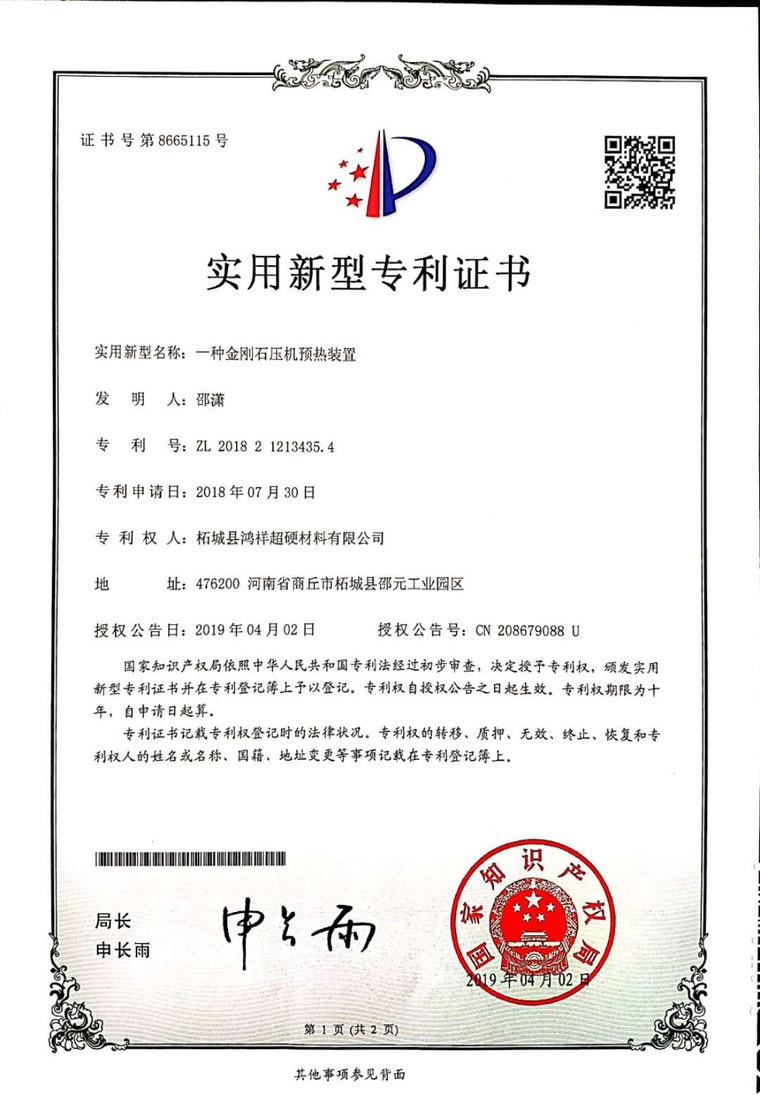
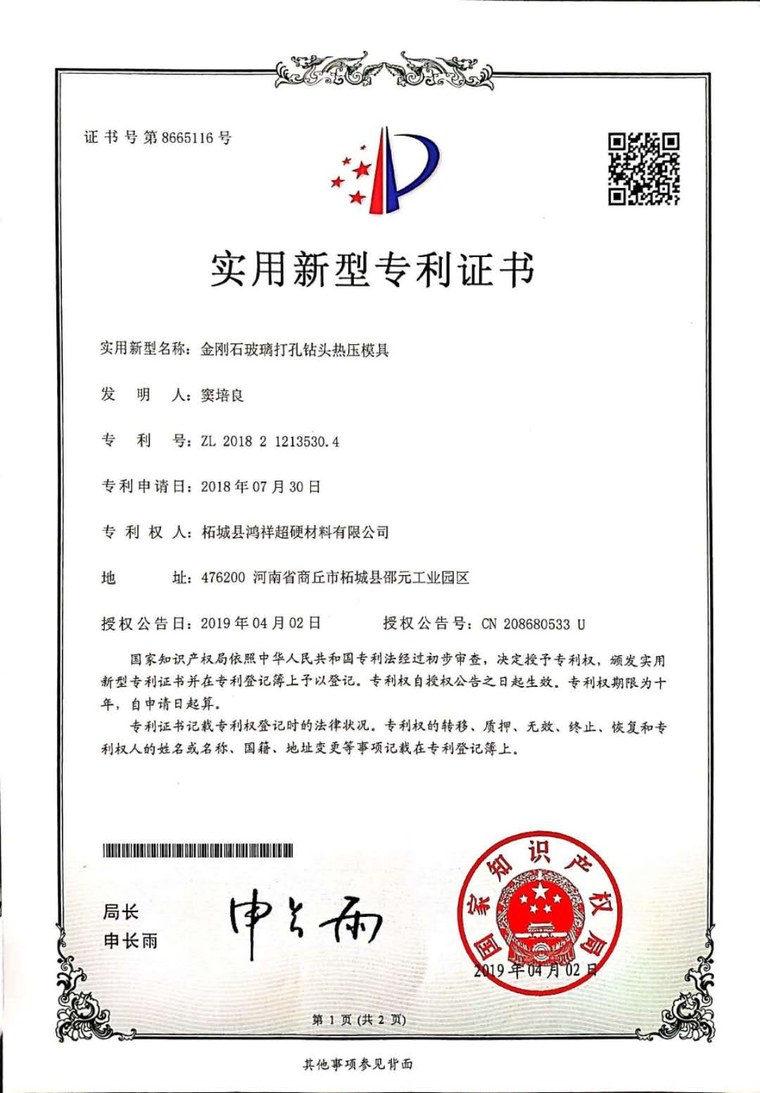
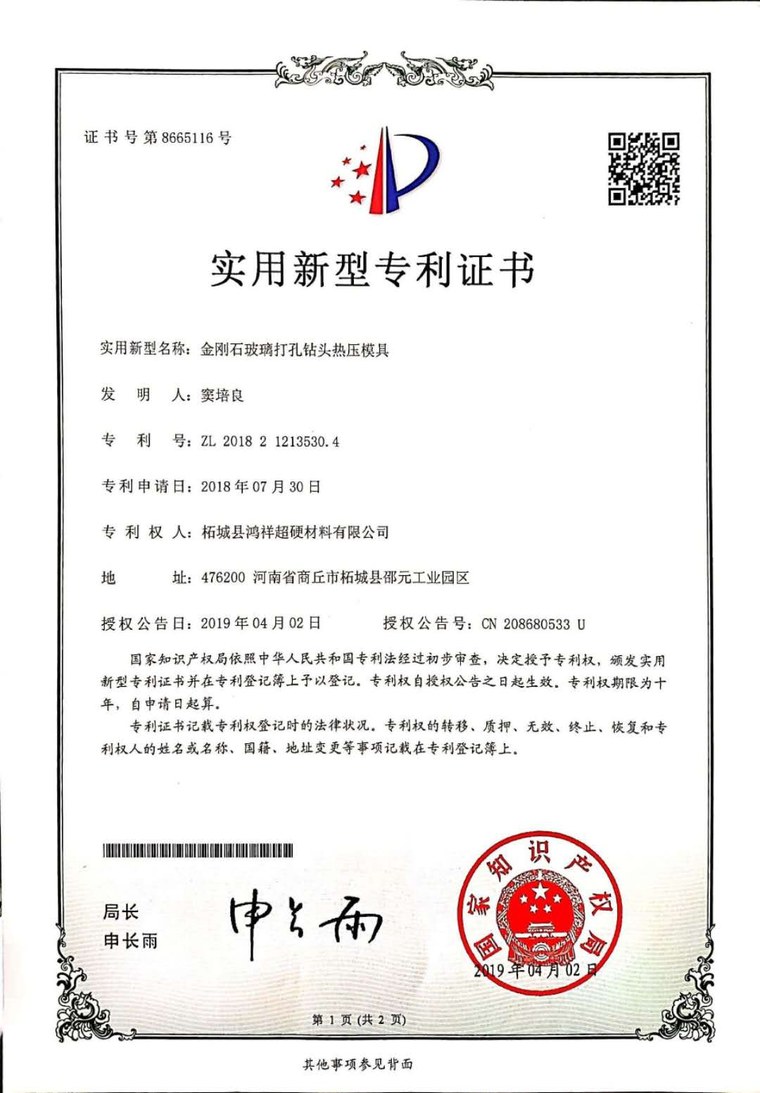
Nineteen Granted Patents, Mostly On Equipment
Our patents sit on presses, hot-pressing tooling and moulds rather than on powder recipes. For a buyer that matters for one reason: it is evidence the process was engineered on this site by people who had to solve the problem themselves, not copied from a catalogue.
What Ships With Your Order
The list below is the standard set, and none of it is optional on a first order. A grade you cannot verify is a grade you cannot defend to your own customer.
| Document | What It Shows | When You Receive It |
|---|---|---|
| Certificate of Analysis | D10, D50, D90 and impurity level for your grade, with the test method named next to each figure. | With the shipment |
| Particle size report | The full distribution curve from laser diffraction, plus sieve results where the grade is a sieved grit. | With the shipment |
| Morphology images | Optical or SEM images of the batch you are actually receiving, not of a reference sample. | With the shipment, or on request |
| Mechanical data | Single-particle compressive strength and TI / TTI figures where the grade calls for them. | With the shipment |
| Safety Data Sheet | Handling, transport and storage classification for the specific grade and packaging. | On request, per grade |
| Packing and weight record | Net and gross weight, drum or bag count and seal numbers, matching the shipping documents. | With the shipping documents |
SGS, Customer Audits And Outside Laboratories
Our supplier profile is verified by SGS, which means company identity, site and export records have been checked by an outside party rather than self-declared on a website.
We accept factory audits, including unannounced visits. Send the checklist your auditor uses and we will have the batch records, equipment logs and certificates ready before they arrive.
If your specification requires a report from a laboratory you nominate, name it at quotation stage. We will price the test and the lead time into the order instead of adding it afterwards.
What Buyers Ask About Documents
Yes. We send the ISO 9001 certificate with its scope statement, the patent list and a sample COA for the grade you are considering. None of that requires a purchase order first.
Those requirements depend on the grade and the destination market, and we will not claim a registration we do not hold. Tell us the country you are importing into and the grade, and we will confirm in writing which statements we can issue and which we cannot.
It is held, not shipped. We re-test it, and if it still fails we tell you before the delivery date rather than after. You then choose between a new batch and a revised specification.
Yes, by default. Bilingual documents can be issued where the importing country requires them.
Send Us The Document List Your Customer Requires
Compliance requirements differ by market, and a generic certificate pack rarely covers what a customs broker or quality team actually asks for. Send us the list together with the grade and destination, and we will reply with exactly which documents we can provide.