
Diamond Micron Powder
Monocrystalline diamond micron powder is made by crushing and shaping selected coarse diamond, then classifying it by settling and cleaning it by acid washing and drying. Because each particle is a single crystal with a defined edge, it cuts predictably and gives the most consistent surface finish of any diamond abrasive.
Diamond Micron Powder Range
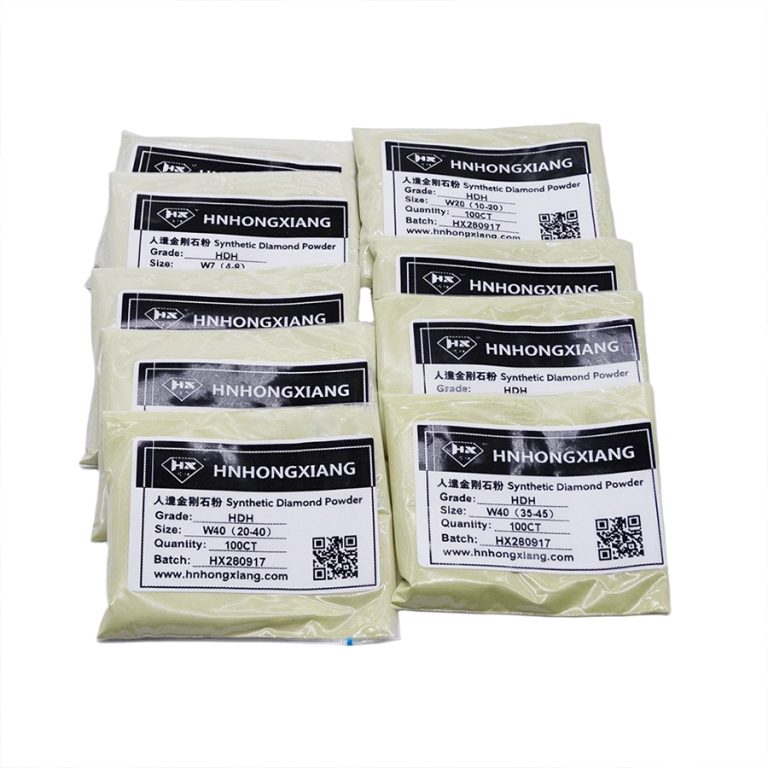
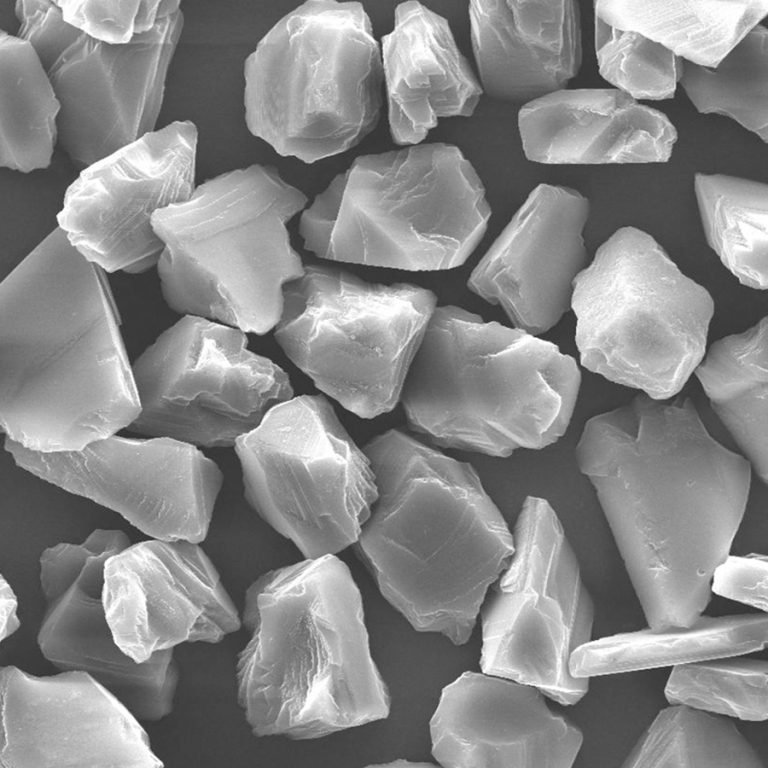
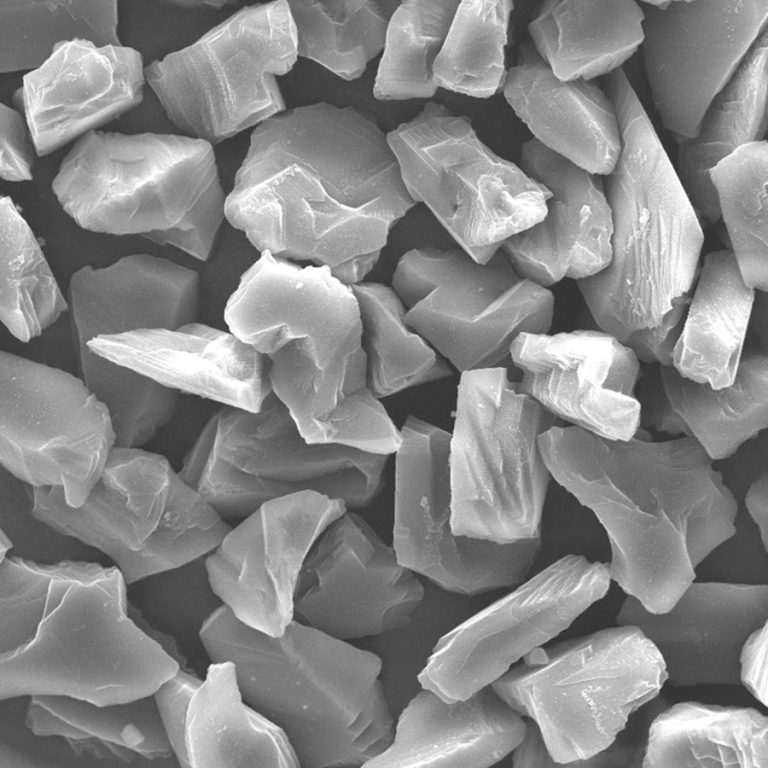
HNHONGXIANG supplies three monocrystalline micron grades: HDY (our standard premium grade, built on selected raw material with high strength and low magnetic content), HDG (the economy black grade for cost-driven processes) and HDH (built on high-quality diamond raw material for maximum strength and tool life). All three are graded on the same ladder, from W50 (36–54 µm) down to W1 (0–1 µm), so you can move between them without changing your process window.
Grades below 0.5 µm are listed separately under fine and nano micron powder. If the process is limited by surface finish rather than by how fast material comes off, a polycrystalline grade will usually do the job with a shallower scratch — see the polycrystalline diamond range.
Which Monocrystalline Grade To Choose
| If your priority is | Choose | Why |
|---|---|---|
| Best surface finish with predictable batch-to-batch behaviour | HDY | Selected raw material, blocky crystals, concentrated PSD, high purity and low magnetic content |
| Lowest cost per carat | HDG | Black economy grade on the same grading ladder; wider strength and purity band |
| Maximum strength, tool life and impact resistance | HDH | Produced from high-quality diamond raw material |
| Particles below 0.5 µm | Fine & Nano Micron Powder | HDYM, HDYMC and HDN cover the sub-micron and nano range |
| A polycrystalline edge for sapphire, SiC or wafer polishing | Polycrystalline Diamond | HDYP, HDP and HDPN give a higher removal rate with a shallower scratch |
| Bonded grit rather than powder | Monocrystalline Diamond | MBD and MBDS are the metal-bond grit grades |
Diamond Micron Powder Grade And Size Range
| GradeChinese standard | Size range (µm)International standard | MeshSieve no. | Typical use |
|---|---|---|---|
| Sub-micronW0.25 – W1.5-Mirror finish and super-finishing | |||
| W0.25 | 0–0.25 | 60,000 | Mirror finish, super-finishing |
| W0.5 | 0–0.5 | 30,000 | Mirror finish, super-finishing |
| W1 | 0–1 | 15,000 | Mirror finish, super-finishing |
| W1.5- | 0–2 | 13,000 | Mirror finish |
| W1.5 | 1–2 | 12,000 | Mirror finish |
| W2.5 | 1–3 | 10,000 | Mirror finish |
| Fine micronW3 – W7Precision polishing where scratch depth matters | |||
| W3 | 2–3 | 7,000 | Mirror to precision polishing |
| W3.5 | 2–4 | 6,500 / 6,000 | Precision polishing |
| W4 | 2–5 | 5,000 | Precision polishing |
| W5 | 3–6 | 4,000 | Precision polishing |
| W6 | 4–6 | 3,500 | Precision polishing |
| W7 | 4–8 | 3,000 | Precision polishing |
| Medium micronW10 – W20+General polishing and lapping | |||
| W10 | 4–9 / 5–10 / 6–12 | 2,500 / 2,000 / 1,800 | General polishing |
| W12 | 8–12 | 1,600 | General polishing |
| W14 | 7–14 / 8–16 | 1,500 / 1,300 | General polishing |
| W20- | 10–20 | 1,200 | Lapping |
| W20 | 12–22 | 1,000 | Lapping |
| W20+ | 15–25 | 800 | Lapping |
| Coarse micronW28 – W50Lapping and stock removal | |||
| W28 | 20–30 | 700 | Lapping |
| W28+ | 22–36 | 600 | Lapping |
| W40- | 20–40 | 500 | Coarse lapping |
| W40 | 30–40 | 450 | Coarse lapping |
| W40+ | 35–45 | 400 | Coarse lapping |
| W50 | 36–54 | — | Coarse lapping |
All grades are produced and inspected to ANSI B74.20-2003 R2010. Tell us the D50 and the upper cut you need and we grade to that specification. Tighter PSD windows, custom cuts and private-label packing are available on request.
Diamond Micron Powder Against Other Types
Against polycrystalline powder
A monocrystalline particle keeps one large edge. It removes material quickly and, because the edge does not break down, it leaves a deeper scratch than a polycrystalline particle of the same size. Choose monocrystalline when removal rate and cost per carat matter; choose polycrystalline when the surface finish is the limit.
Against fine and nano micron powder
The fine and nano range is the same material continued below 0.5 µm. At that size the top cut, not the average particle size, decides the result, so those grades are classified by settling and verified by laser diffraction before release.
Against MBD high-strength grit
MBD is a grit, not a powder: blocky, dense crystals supplied in mesh ranges from 30/40 down to 400/500 and selected for strength inside a metal bond. Micron powder is selected for the surface it produces, not for the load it can take.
Diamond Micron Powder Questions
How is the particle size distribution controlled?
What purity do you guarantee?
Can you supply a custom particle size distribution?
What is the difference between a W grade and a micron figure?
What are the lead times?
What To Include
Tell us which product family you are checking and what result you need. We will recommend a specific grade and sample route.