
HDP Detonation Polycrystalline Diamond Powder
HDP Series / Grain size 0-1 to 1-8 um (per factory table: 0-1~1/8) / Polycrystalline
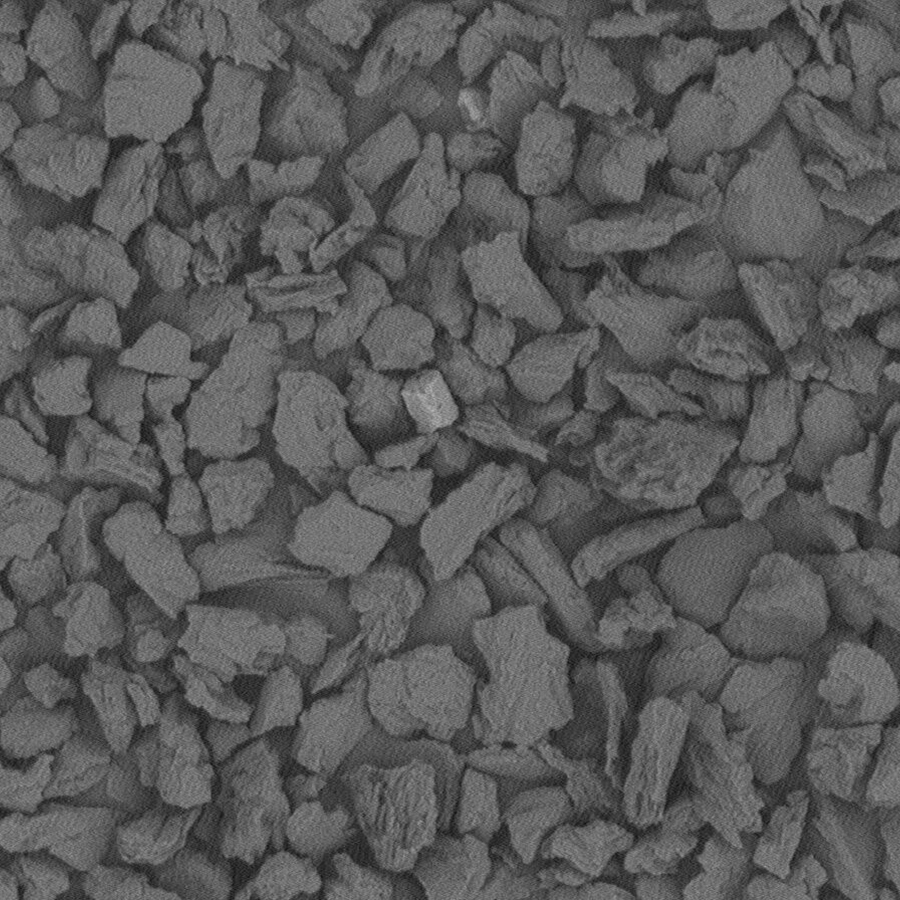
HDP Detonation Polycrystalline Diamond Powder
HDP Detonation Polycrystalline Diamond Powder is a polycrystalline grade from the HDP series, produced factory-direct at our own base in Zhengzhou, Henan - the Diamond Capital of China. Standard grain size range: 0-1 to 1-8 um (per factory table: 0-1~1/8). Each batch is checked for particle size distribution before packing, and can be supplied in trial quantities for process validation.
Advantage
- Made by detonation synthesis from graphite — no milling, no re-shaping
- Multi-layered particles with more crystal edges and more cutting faces
- Removal rate 2 to 3 times that of monocrystalline powder of the same size
- Coarse grains break down in use instead of dragging a deep scratch
- Surface roughness below 1 nm attainable in the final polishing step
- Ships in 1 to 2 working days from stock
Send your workpiece material, target surface finish and order quantity — we confirm the matching grade and sample route within 24 hours.
Product Overview
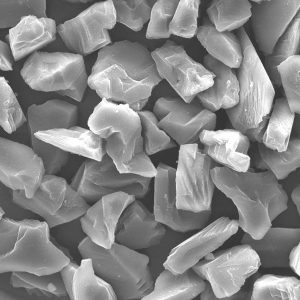
HDP Detonation Polycrystalline Diamond Powder is made by a directed detonation process: the shock wave drives a metal flyer plate into a graphite plate and converts the graphite into polycrystalline diamond. Nothing about the particle is milled or shaped afterwards, so the surface stays rough and multi-layered.
Each particle has several crystal layers, which means more crystal edges and more cutting faces per particle. In polishing, every edge cuts; and when a coarse grain does break down it sheds smaller particles that keep working instead of leaving a deep score.
Typical use is sapphire, engineering ceramic, window material and optical glass substrate polishing, where the removal rate of monocrystalline powder is too low and its scratch profile too deep.
Standard Grain Size Chart
Our synthetic diamond micron powder is graded to the Chinese national standard ladder, with the matching international size range and mesh number shown alongside each grade. The ladder runs continuously from W0.25 (0 – 0.25 µm) up to W50 (36 – 54 µm).
| GradeChinese standard | Size range (µm)International standard | MeshSieve no. | Typical use |
|---|---|---|---|
| Sub-micronW0.25 – W1.5-Mirror finish and super-finishing | |||
| W0.25 | 0–0.25 | 60,000 | Mirror finish, super-finishing |
| W0.5 | 0–0.5 | 30,000 | Mirror finish, super-finishing |
| W1 | 0–1 | 15,000 | Mirror finish, super-finishing |
| W1.5- | 0–2 | 13,000 | Mirror finish |
| W1.5 | 1–2 | 12,000 | Mirror finish |
| W2.5 | 1–3 | 10,000 | Mirror finish |
| Fine micronW3 – W7Precision polishing where scratch depth matters | |||
| W3 | 2–3 | 7,000 | Mirror to precision polishing |
| W3.5 | 2–4 | 6,500 / 6,000 | Precision polishing |
| W4 | 2–5 | 5,000 | Precision polishing |
| W5 | 3–6 | 4,000 | Precision polishing |
| W6 | 4–6 | 3,500 | Precision polishing |
| W7 | 4–8 | 3,000 | Precision polishing |
| Medium micronW10 – W20+General polishing and lapping | |||
| W10 | 4–9 / 5–10 / 6–12 | 2,500 / 2,000 / 1,800 | General polishing |
| W12 | 8–12 | 1,600 | General polishing |
| W14 | 7–14 / 8–16 | 1,500 / 1,300 | General polishing |
| W20- | 10–20 | 1,200 | Lapping |
| W20 | 12–22 | 1,000 | Lapping |
| W20+ | 15–25 | 800 | Lapping |
| Coarse micronW28 – W50Lapping and stock removal | |||
| W28 | 20–30 | 700 | Lapping |
| W28+ | 22–36 | 600 | Lapping |
| W40- | 20–40 | 500 | Coarse lapping |
| W40 | 30–40 | 450 | Coarse lapping |
| W40+ | 35–45 | 400 | Coarse lapping |
| W50 | 36–54 | — | Coarse lapping |
All grades are produced and inspected to ANSI B74.20-2003 R2010. Tell us the D50 and the upper cut you need and we grade to that specification. Tighter PSD windows, custom cuts and private-label packing are available on request. Detonation polycrystalline powder is classified on the same ladder; the common polishing cuts are W1 to W14.
Recommended Applications
Factory Checks Behind This Grade
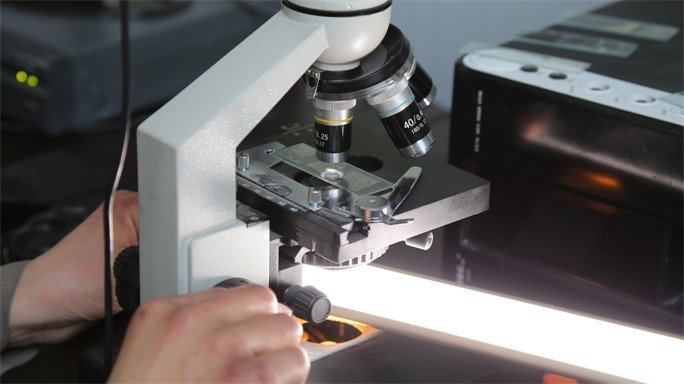
HNHONGXIANG has produced synthetic diamond powder since 1990 in Henan, China. The factory covers about 124,000 square meters and supplies micron powder, diamond grit, coated diamond and functional diamond materials for global abrasive and precision processing customers.

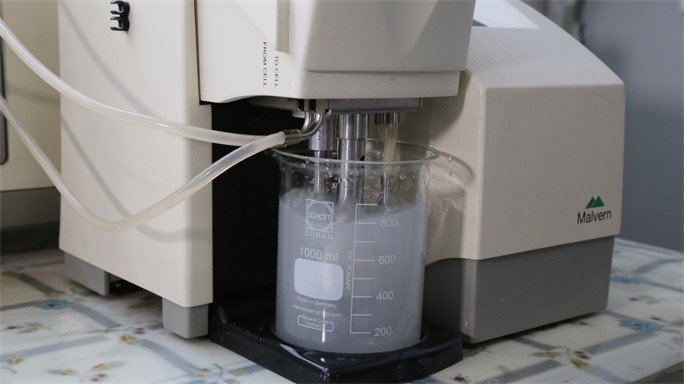
Batch particle-size inspection
Laser diffraction PSD checked before packing, for stable batch-to-batch performance.

Factory-direct processing
Grading, washing, drying and packing handled in our own plant.

Custom grades available
Grade selection and private-label packaging to your specification.

Export support
Samples, trial orders and bulk shipments with full batch documents.
Packing And Export Options
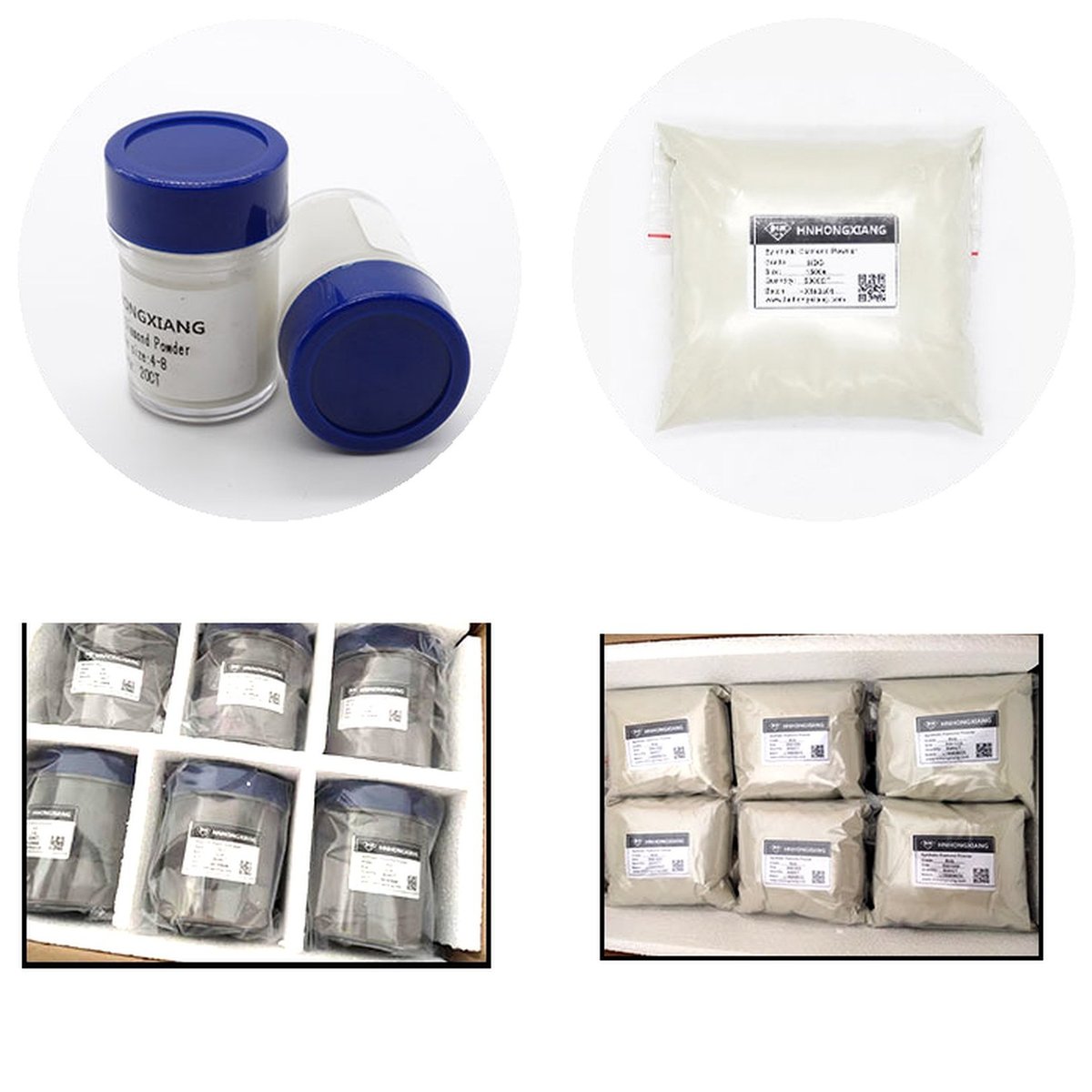
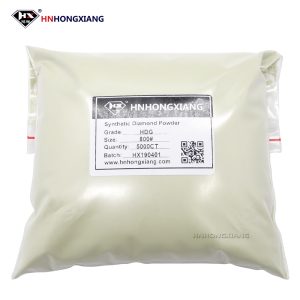
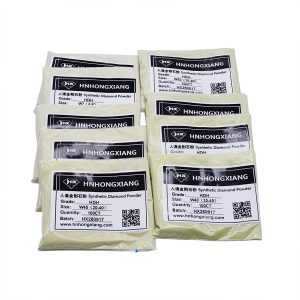
Standard packing includes sealed bottles, bags or drums according to particle size and order quantity. Inner packaging is moisture-resistant and clearly labeled with product model, grain size, batch number and net weight.

Multiple package options
Sample, kilogram and bulk orders.

Moisture-resistant packing
Sealed bottles, bags or drums.

Clear labeling
Model, grain size, batch no. and net weight.

Export ready
Cartons or drums for air, express or sea.
Bottle package
50 / 100 / 150 / 200 / 300 / 500 / 1000 / 2000 / 3000 / 5000 / 10000 ct
Bag package
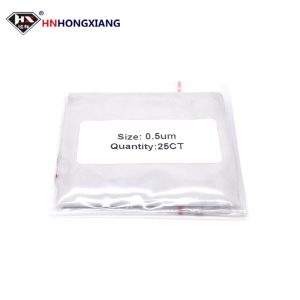
100 ct – 10000 ct sealed foil bags, labelled per batch.
Shipping methods
Air, express or sea freight according to order quantity.
Where HDP Sits In The Polycrystalline Range
Polycrystalline diamond powder carries many small cutting edges on each particle instead of one large edge. The result is a higher removal rate with a shallower scratch, which is why it dominates sapphire, SiC and wafer polishing. The table shows how the poly grades compare.
| Grade | Type | Production route | Size range | Cutting behaviour | Typical applications |
|---|---|---|---|---|---|
| HDYP | Quasi-polycrystalline micron | Cost-reduced polycrystalline route | 1 — 50 µm | Many small edges per particle; high removal without deep scratches | Sapphire, SiC and ceramic wafer polishing slurry; metal finishing |
| HDPThis grade | Detonation polycrystalline | Detonation synthesis | 1 — 40 µm | Multi-layered particles with extra crystal edges; coarse grains break down to expose fresh edges | Sapphire, engineering ceramic and optical glass substrates |
| HDPN | Nano detonation polycrystalline | Detonation synthesis (nano) | 5 — 500 nm | Nano-scale particles with very high specific surface area | Diamond coating, nano polishing, composite reinforcement, thermal management |
| HDRP | Resin-bond polycrystalline | Polycrystalline, selected for resin systems | 0 — 40 µm | Friable structure tuned for resin-bond retention | Resin-bond wheels, lapping and polishing compounds |
What To Include
Send the current product, particle size target and process problem. We will confirm the matching grade, sample route and packing option.