
Diamond Lapping Paste
Factory-direct diamond product / Grain size W0.5 - W50
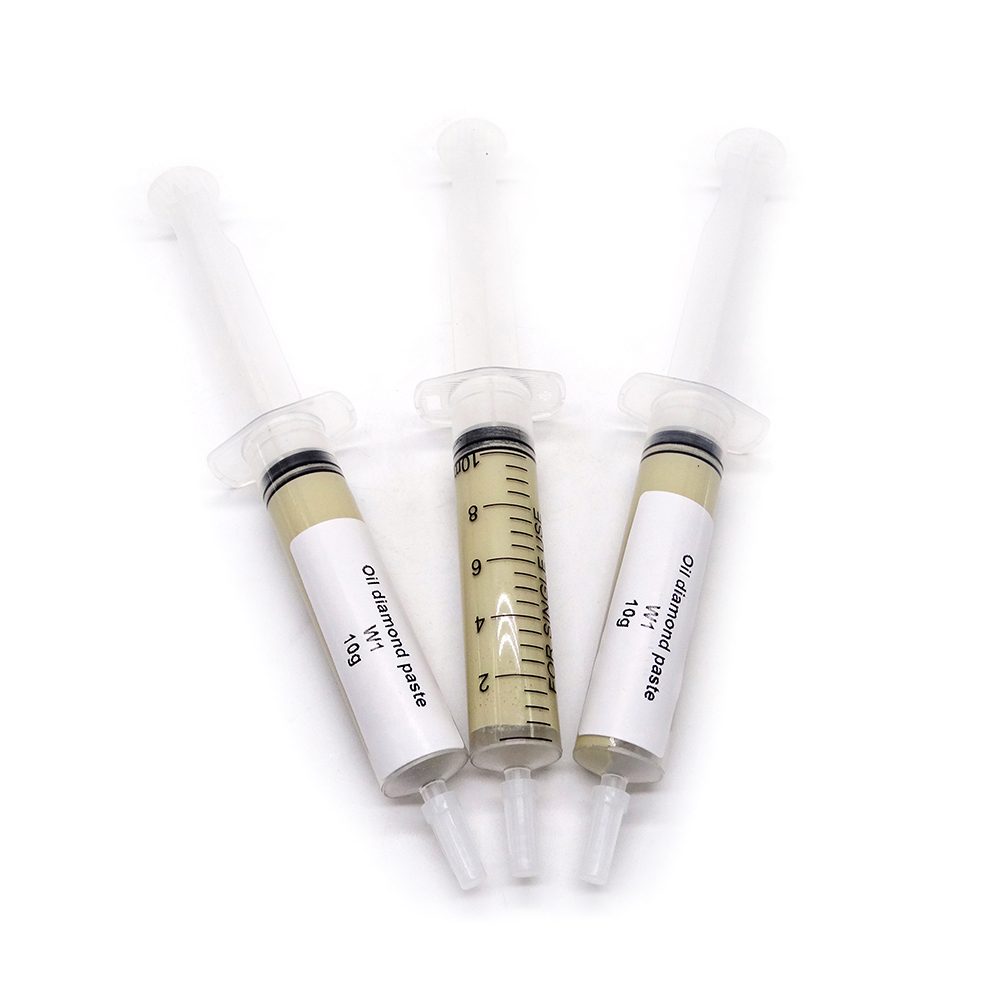
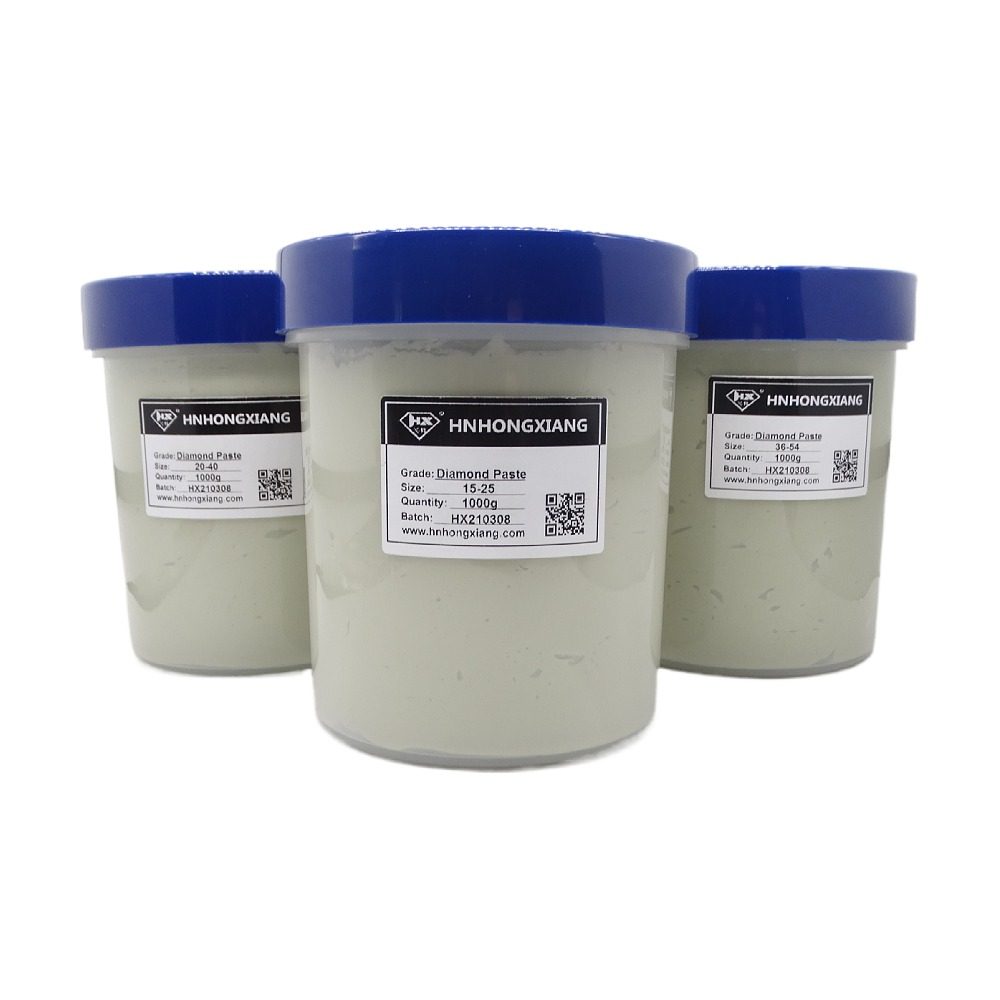
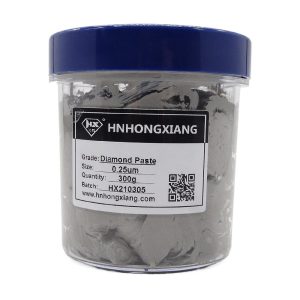
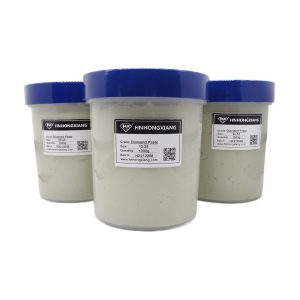
Diamond Lapping Paste is a synthetic diamond grade from the HNHONGXIANG series, produced factory-direct at our own base in Zhecheng County, Henan - the diamond powder capital of China. Standard grain size range: W0.5 - W50. Each batch is checked for particle size distribution before packing, and can be supplied in trial quantities for process validation.
Advantage
- Made from our own micron powder — the grade on the label is the grade in the jar.
- Monocrystalline for fast cutting, polycrystalline for a finer and more uniform finish.
- Water-based, oil-based and water-oil dual-use carriers, chosen by workpiece and cleaning step.
- Stays workable in the syringe: no skinning over, no dry plug at the nozzle.
- Syringe lays a metered bead, so small laps and awkward parts get no waste.
- Grade, carrier, concentration and label set per order, with a sample lot before bulk.
Send your workpiece material, target surface finish and order quantity — we confirm the matching grade and sample route within 24 hours.
Product Overview
Diamond lapping paste is diamond micron powder held in a carrier and thickened so it stays on the lap instead of running off. The powder in the jar is our own, from the same classification line as our loose micron grades — the grade printed on the label is the grade in the paste, not a repackaged purchase.
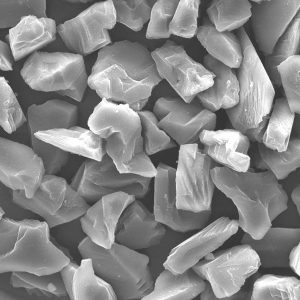
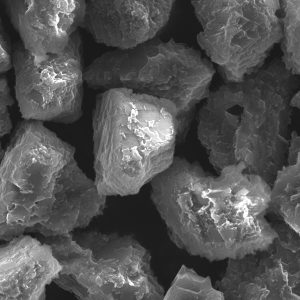
Monocrystalline or polycrystalline. Monocrystalline paste is built on blocky single crystals with sharp edges: it cuts quickly and leaves a defined, even scratch pattern, which is what you want on mould steel, carbide and hard coatings before the finishing step. Polycrystalline paste is built on particles that micro-fracture in use, exposing fresh edges instead of dulling, so the finish is finer and more uniform at a lower removal rate. Mirror work on sapphire, SiC, ceramics and gemstone usually goes better on poly; rough lapping and die work on mono.
Three carriers, and the choice matters. Water-based paste rinses off with water, keeps the workpiece cool and leaves no oil film — the default for glass, ceramics, silicon and work that has to be cleaned before inspection. Oil-based paste lubricates better and does not evaporate, so it stays workable through a long lapping cycle and protects steel parts from flash rust. Water-oil dual-use paste can be thinned and cleaned with either, which is what most job shops keep on the shelf when they run mixed materials through the same bench.
Grades from W0.5 to W50. W0.5 to W3 is final polish, with no scratch visible under a bright light. W4.5 to W9 is precision lapping ahead of polish. W13 to W25 is general lapping where you still want a controlled finish. W35 and W50 remove material and hold a dimension rather than refine a surface. W0.25 is available on request for the finest work.
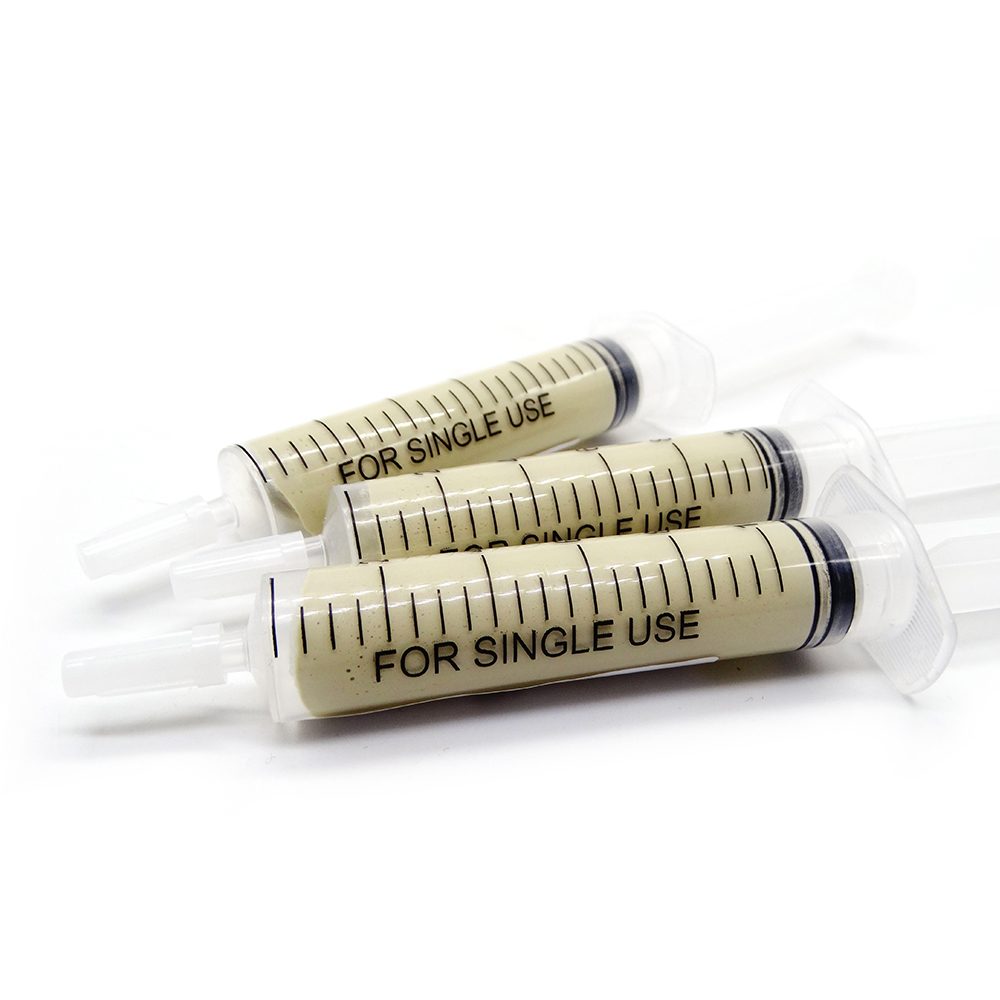
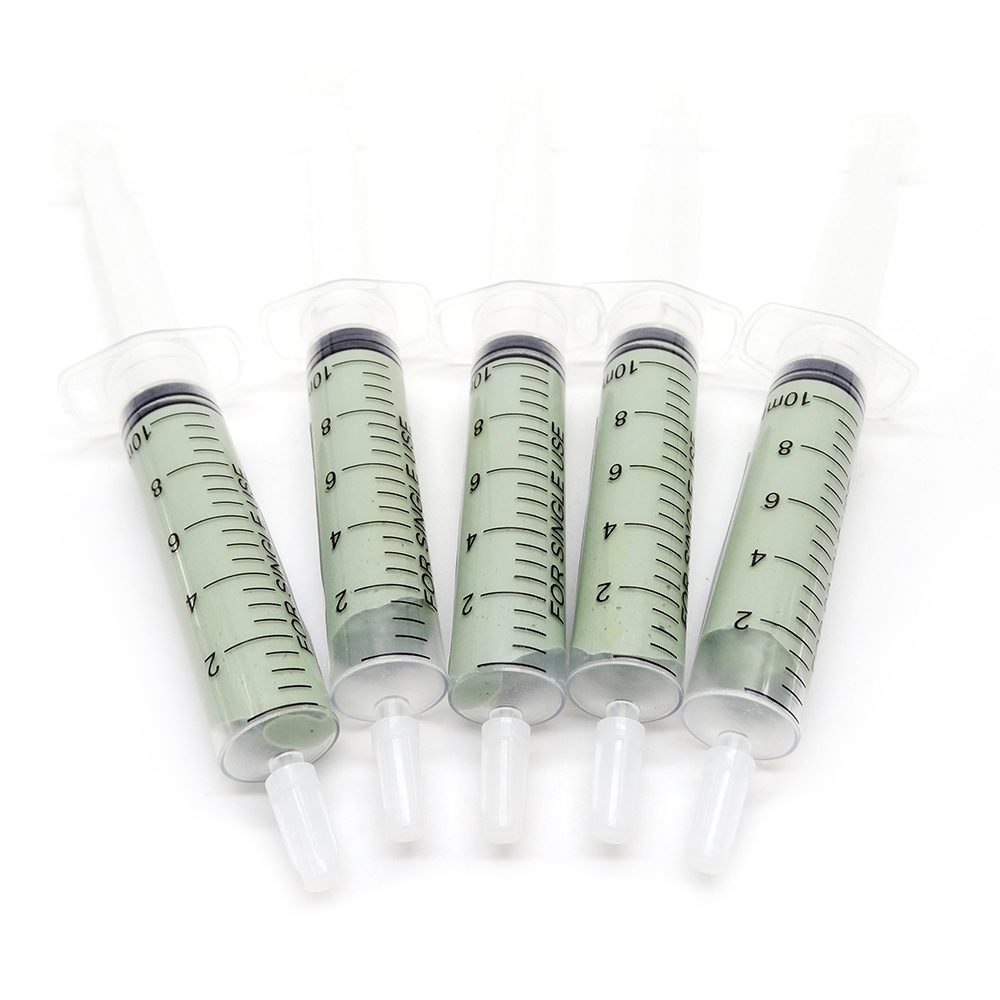
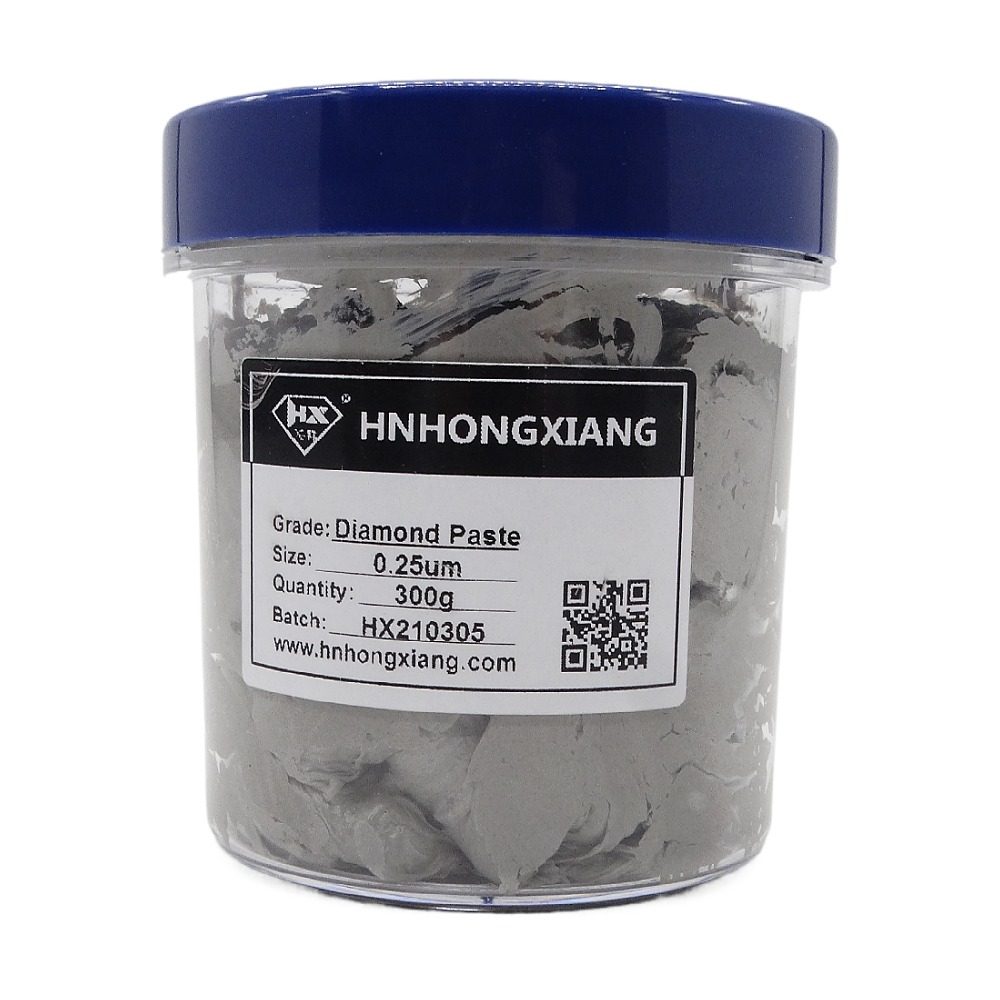
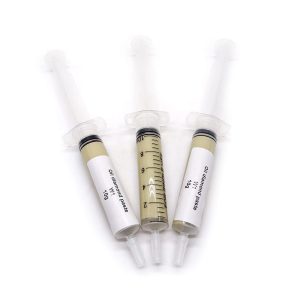
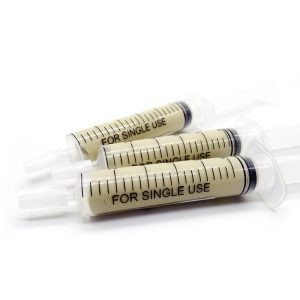
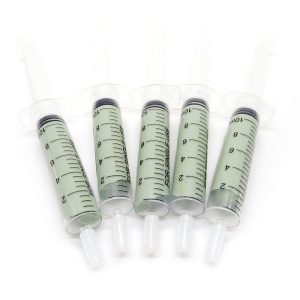
Packing follows use. The 5 g and 10 g syringe (13 mm across, 150 mm long) lays a metered bead straight on the lap, with nothing wasted and nothing drying in an open jar. Jars at 300 g and 1 kg suit a line running the same grade every day. Bulk containers are quoted per order. Concentration, colour coding and label text are set per shipment.
Where paste beats loose powder. Loose micron powder has to be mixed, wetted and kept in suspension on the lap, and on a hand lap or a small machine that is a variable every operator introduces differently. Paste removes it — the concentration is already set, the carrier is already matched, and the only decision left is how much to lay down. For a shop running twenty different parts a week, that repeatability is worth more than the small difference in cost per carat.
What goes wrong, and why. Three failures cover most of the complaints we hear. Paste used too coarse for the required finish — stepping from W13 straight to a mirror specification never works, because the scratches are cut too deep to polish out afterwards. Carrier chosen against the cleaning step — oil-based paste on parts that go straight into an aqueous washer leaves a film that shows up later as haze under inspection. And paste allowed to dry on the lap — once the carrier is gone the powder clumps and cuts a gouge instead of a scratch. Keep the lap charged, keep the syringe capped, and none of the three happen.
Grades We Supply
| Grade range | Typical use |
|---|---|
| W0.5 - W3 | Final polish, no visible scratch |
| W4.5 - W9 | Precision lapping, uniform scratch pattern |
| W13 - W25 | General lapping with controlled finish |
| W35 - W50 | Coarse lapping, dimensioning and heavy removal |
Standard Size Reference
W grades follow the Chinese standard chart and map onto the mesh figures most buyers still quote. Read across: the micron window is what the paste actually contains; the mesh column is only a conversion.
| Grade | Size range (µm)D10 – D90 | Meshapprox. | Typical use |
|---|---|---|---|
| Final polishW0.5 – W3no visible scratch | |||
| W0.5 | 0 – 1 | #28,000 | Final polish |
| W1 | 0 – 2 | #14,000 | Mirror finish |
| W3 | 2 – 4 | #8,000 | Pre-polish |
| Precision lappingW4.5 – W9uniform scratch, ready for polish | |||
| W4.5 | 3 – 6 | #5,000 | Precision lap |
| W6 | 4 – 8 | #3,000 | Precision lap |
| W8 | 6 – 10 | #2,000 | Fine lap |
| W9 | 6 – 12 | #1,800 | Fine lap |
| General lappingW13 – W25stock removal with controlled finish | |||
| W13 | 10 – 16 | #1,500 | General lap |
| W15 | 10 – 20 | #1,200 | General lap |
| W17.5 | 15 – 20 | #1,000 | General lap |
| W25 | 20 – 30 | #800 | General lap |
| Coarse lappingW35 – W50dimensioning and heavy removal | |||
| W35 | 30 – 40 | #600 | Coarse lap |
| W50 | 40 – 60 | #400 | Coarse lap |
Mesh figures are indicative conversions, not a grading standard. Order by the W grade or the micron window. Sizes outside this chart are cut to order.
Recommended Applications
Factory Checks Behind This Grade
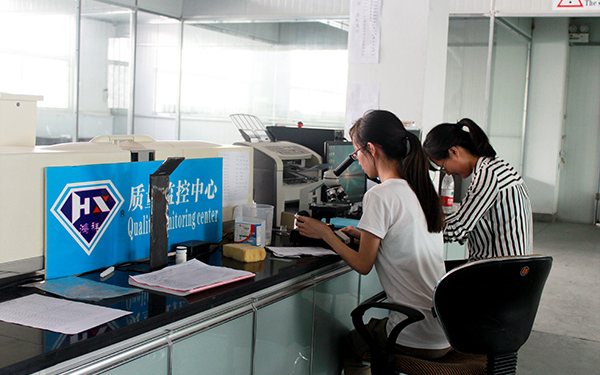
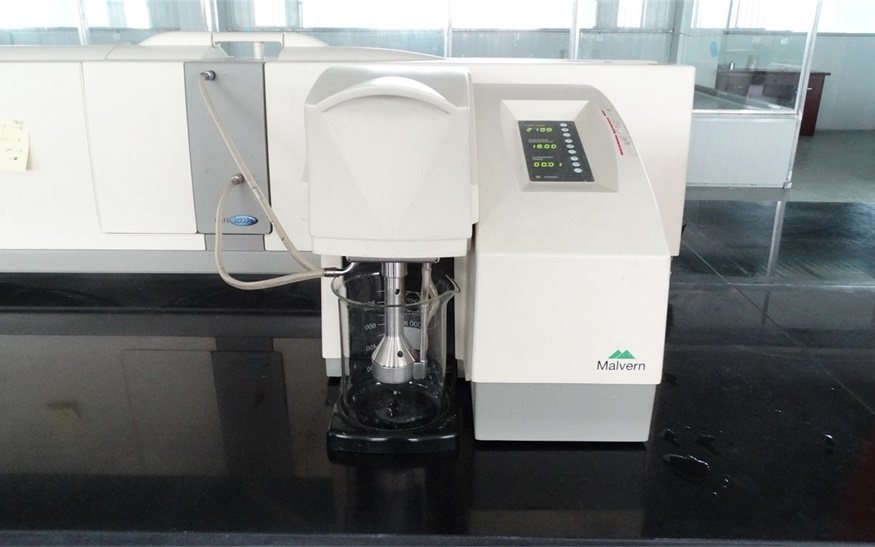
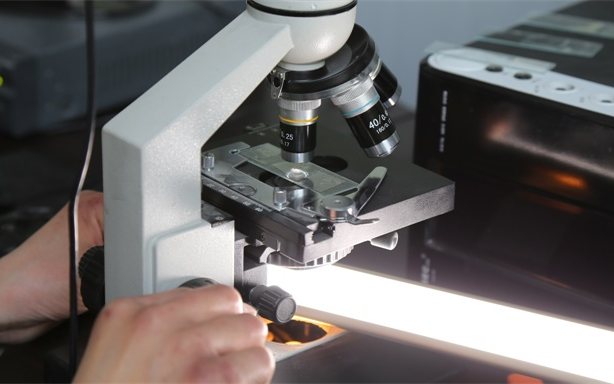
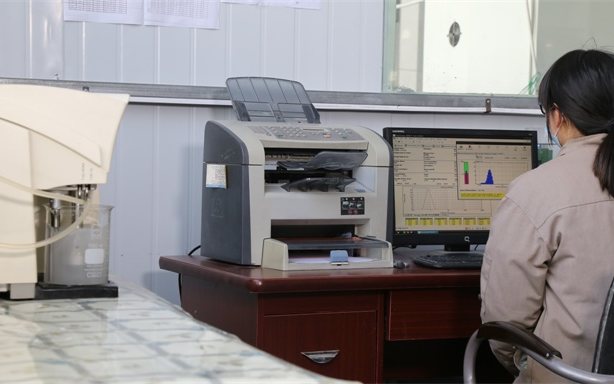
HNHONGXIANG grades, tests and packs diamond in its own plant in Zhecheng County, Henan. Each production batch is checked before it is released: particle size on a laser diffraction analyser, crystal shape under an optical microscope, and the full distribution curve compared with the grade specification. Batch records travel with the shipment, and grade selection or private-label packing can be built into the run.
Packing And Export Options
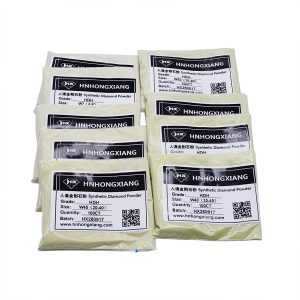
Standard packing is a 5 g or 10 g syringe (13 mm × 150 mm), a 300 g or 1 kg jar, or a bulk container, depending on grade and order quantity. Every unit carries the grade, micron size, batch number and net weight; on OEM orders the label can carry your own artwork. Syringes ship in rigid trays so the plunger cannot be pushed in transit.

Syringe, jar or bulk
5 g and 10 g syringes, 300 g and 1 kg jars, bulk on request.
Sealed against drying
Capped syringe and lidded jar keep the paste workable.
Grade and batch on the label
Grade, micron size, quantity and batch number every time.
Export packing
Carton with desiccant, air or sea freight.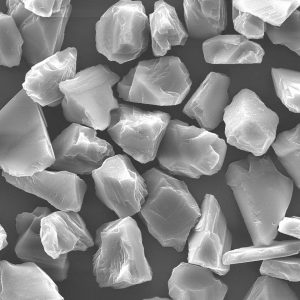
Where Diamond Lapping Paste Sits In The Range
Lapping paste is the same diamond we grade for loose powder, held in a carrier so it stays in the contact zone instead of running off the plate. The four combinations below cover the range; the choice usually comes down to what the part is made of, and whether bare steel will sit on the plate overnight.
| Type | Carrier | Size range | Behaviour | Typical use |
|---|---|---|---|---|
| Monocrystalline, water-based | Water | W0.5 — W50 | Free-cutting and rinses off easily; lowest cost per gram | Carbide, glass, ceramic and general metal lapping |
| Monocrystalline, oil-based | Oil | W0.5 — W50 | Stays wet longer and protects bare steel from flash rust | Mould steel, mirror finishing, machine ways |
| Monocrystalline, dual-use | Water or oil | W0.5 — W50 | Emulsifies in either carrier; one drum covers both lines | Shops running mixed materials or trialling a new process |
| Polycrystalline | Water or oil | W0.5 — W50 | Many small edges per particle; higher removal with a shallower scratch | Sapphire, SiC, wafer and hard-composite lapping |
What To Include
Send the current product, particle size target and process problem. We will confirm the matching grade, sample route and packing option.